
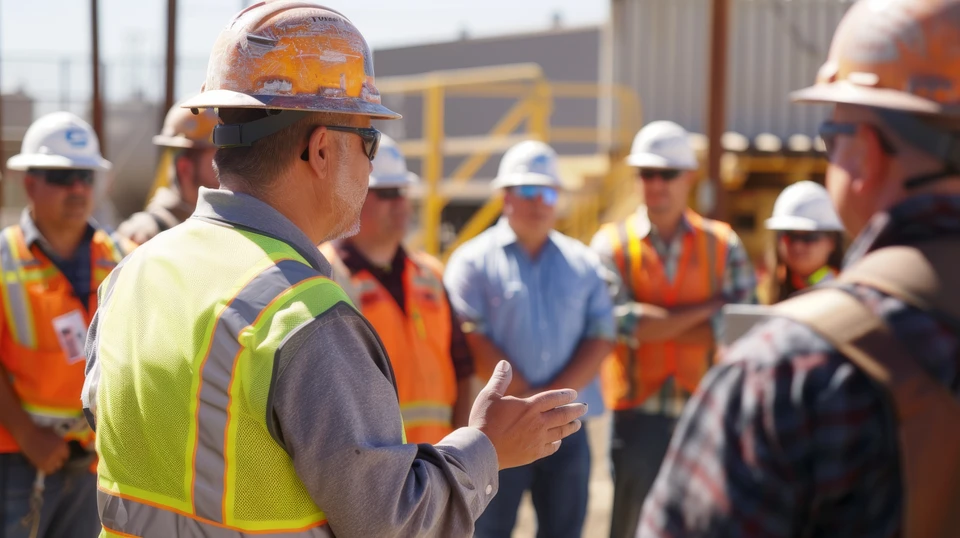
Hiring the right people is only the beginning. For underground construction companies, what happens during an employee’s first few days and weeks can have a lasting effect on safety, productivity, confidence and retention.
Field crews have traditionally relied heavily on hands-on learning. A new employee might be paired with an experienced worker, shown the basics and expected to learn the rest as the job progresses. While experienced crew members are an invaluable source of knowledge, relying entirely on informal training can create inconsistencies. One new hire may receive excellent guidance while another is left trying to figure things out along the way.
A more structured onboarding process helps eliminate that uncertainty and gives every new employee a clearer path toward becoming a safe, dependable member of the crew.
Put Expectations in Writing
One of the simplest improvements a company can make is documenting what is expected of a new employee.
There are plenty of things that can be explained during an employee’s first morning, but it is unrealistic to expect someone to remember everything they hear while also learning new names, equipment, procedures and responsibilities.
A straightforward written guide gives employees something they can reference later. It should answer basic questions such as when and where the workday begins, what employees need to bring, how daily safety or job briefings are handled, how crews communicate and who employees should contact when they have a question or safety concern.
The goal isn’t to create an overwhelming rulebook. It is to clearly communicate what being a successful member of the crew looks like.
Existing employees can also help develop these expectations. Their input can identify details management might overlook while giving experienced team members a greater role in maintaining the standards they helped establish.
Have Technology Ready Before Day One
Technology has become part of everyday field operations. Timekeeping systems, scheduling platforms, digital work orders, inspection programs, GPS tools and other applications may all be necessary for an employee to do the job.
Whenever possible, accounts and permissions should be established before the employee needs them.
A new hire who is ready to work but spends several days waiting for usernames, passwords or approvals can quickly become frustrated. It also creates additional work for other crew members who may have to provide temporary workarounds.
Preparing these systems ahead of time removes an unnecessary obstacle and helps employees become productive sooner.
Give New Employees a Mentor
Assigning an experienced employee to serve as a mentor can make the transition into a new company much easier.
The mentor does not necessarily need to be the crew leader. In many cases, an established employee who understands company expectations and communicates well can be an excellent choice.
Having a designated person available for everyday questions gives the new employee somewhere to turn when they are unsure about a procedure, piece of equipment or jobsite expectation. It can also reduce the burden on supervisors who need to remain focused on production and safety.
Mentorship provides another benefit: it creates opportunities for experienced employees to develop leadership skills of their own.
Check In Frequently
New employees may encounter problems that supervisors never hear about unless someone makes a point of asking.
Short, scheduled check-ins during the first couple of weeks can uncover those issues early. These conversations do not need to be lengthy. Ten or fifteen minutes can be enough to discuss what the employee learned, what was difficult, where additional help is needed and whether any safety questions or concerns came up
When possible, some of these conversations should happen face-to-face. An in-person discussion can often reveal uncertainty or frustration that may not be obvious through a quick phone call or text message.
Regular communication also reinforces that asking questions is part of the learning process rather than something employees should avoid.
Establish Clear Training Milestones
Time on the job alone does not necessarily mean someone is ready to perform a task independently.
Creating basic training milestones gives both the employee and the company a clearer way to evaluate progress. A simple checklist can identify the skills, procedures and equipment knowledge employees should develop during different stages of onboarding.
Those milestones should remain flexible. People learn at different speeds, and some tasks naturally require more practice than others. The purpose should be to guide development—not punish someone for failing to meet an arbitrary deadline.
What matters is having a shared understanding of where the employee is headed and what competency looks like.
Build Skills in Stages
Even experienced employees need training when joining a new company. Equipment, procedures, documentation, safety practices and customer expectations can vary significantly from one contractor to another.
Instead of trying to teach everything immediately, training can be divided into manageable stages.
During the first week, the emphasis might be on jobsite orientation, ride-alongs, safety fundamentals and becoming familiar with tools and equipment. The next stage can introduce supervised hands-on work and routine tasks. As the employee becomes more comfortable, they can begin demonstrating specific tasks independently while an experienced mentor or supervisor verifies their work.
Documenting this progression is important. A repeatable training process helps ensure that every employee receives the same foundation instead of having their training depend entirely on which crew they happen to join.
Consistency Creates Safer, Stronger Crews
A good onboarding program does not have to be complicated.
Written expectations, prepared technology, mentorship, regular communication and a basic training plan can dramatically improve the experience for both new employees and existing crews.
Most importantly, structure reduces guesswork. Employees understand what is expected, supervisors have a clearer way to evaluate progress and experienced crew members know what they are responsible for teaching.
For underground construction companies, where equipment knowledge, jobsite awareness and safe work practices are critical every day, that consistency can help turn a new employee into a capable crew member more efficiently while reinforcing the standards of the entire organization.
Supporting the Underground Construction Industry
At Georgia Underground Superstore (GUS), we know that strong crews need more than good equipment, they need the knowledge, support and resources to use that equipment effectively. GUS serves underground construction professionals with equipment, tooling, parts and industry expertise designed to help contractors keep their crews productive and their projects moving. Whether a company is bringing a new operator up to speed, expanding its capabilities or equipping an experienced crew for the next job, our team is here to help contractors find the right solutions for the work ahead.
Source Credit: This article was adapted and expanded from concepts presented in “Standardizing Onboarding for Field Crews,” by Kevin Saboori, published by Dig Different on July 27, 2026.