
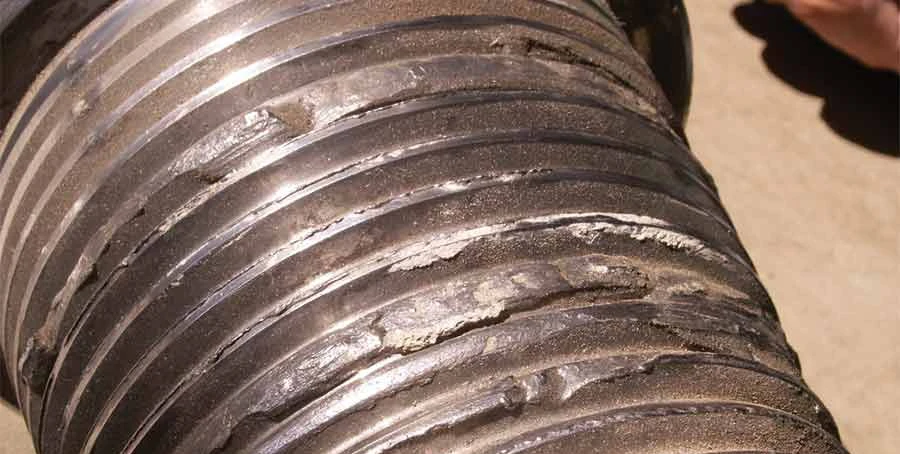
Drill pipe failure is one of the more costly and time-consuming problems an HDD crew can encounter. A downhole failure can mean lost production time, difficult recovery efforts, additional drilling, and significant project delays.
Fortunately, drill pipe often provides warning signs before failure occurs. Understanding the pipe’s history, monitoring its condition, staying within proper operating parameters, and storing it correctly can help contractors identify potential problems early and reduce the risk of failure.
Know the History and Condition of Your Drill Pipe
Both new and used drill pipe can perform safely and successfully when properly selected, inspected, and maintained. With new pipe, contractors should pay attention to the frequency of inspection rejects, as a high number may point to potential durability concerns.
Some drill pipe also features hard banding in high-wear areas. Different types may be used depending on drilling conditions, including rock formations. Manufacturers can provide reference materials, calculations, inspection reports, and recommendations to help contractors select the right pipe for an application.
Used drill pipe requires careful inspection because wear and fatigue accumulate throughout its service life. Outside diameter, or OD, is an important measurement. Once the OD falls below certain dimensions, the pipe may no longer meet premium-class criteria and could indicate that the tube is becoming compromised.
Hard banding should also be inspected for excessive wear or improper placement, both of which can contribute to premature pipe wear.
Pay Attention to Where the Pipe Has Been Used
Not every joint in a drill string experiences the same amount of stress.
Pipe positioned near a large hole opener during a demanding bore can experience considerably more abuse, fatigue, and induced stress. These joints should receive especially thorough inspections after difficult projects.
Steel accumulates stress over time. A joint exposed to severe conditions may develop damaging fatigue quickly, while another joint working under easier conditions could remain in service for years.
Because cumulative fatigue cannot necessarily be measured until a crack begins developing, regular inspections are important. The original article recommends inspecting drill pipe annually or following a particularly difficult job. Many failures are found within the first few feet beyond the weld and tool joints.
Manufacturers have also worked with heat-treatment methods and steel compositions designed around a “leak before break” concept. The goal is for damaged pipe to develop a detectable leak while remaining intact rather than suddenly separating downhole.
Use the Right Drill Pipe for the Job
Selecting the correct drill pipe for the application can significantly reduce the risk of failure.
Pipe that is too small for the demands of a project is more likely to fail. Larger-diameter pipe generally provides greater strength and resistance to buckling, making proper sizing especially important on demanding bores.
Operators should understand the limitations of their pipe and remain within recommended operating parameters throughout the project.
The Cost of Drill Pipe Failure
When drill pipe fails, the consequences can go far beyond replacing a damaged joint.
If pipe breaks during pilot-hole operations, crews may lose valuable time attempting to fish it from the bore. If recovery is unsuccessful, an entirely new crossing may have to be drilled.
A failure during pullback can be even more complicated because the product being installed may need to be extracted along with the broken drill pipe.
Preventive inspections and proper drill pipe management can help avoid these costly situations.
Track Your Drill Pipe
Knowing the history of each joint or drill string can help contractors make better inspection and replacement decisions.
For contractors operating multiple rigs, keeping pipe associated with the rig on which it was used can make it easier to understand its accumulated fatigue. Combining pipe from multiple rigs onto a common storage rack makes that history much harder to track.
Some projects also create more fatigue than others. Rotational bending fatigue and mechanical overload are among the most common causes. Rotating pipe through a tight bore radius can create repeated bending stress, while excessive operating loads can add further strain.
Knowing which pipe has experienced these demanding conditions helps crews identify joints that may require closer inspection.
Don't Overlook Drill Pipe Storage
How drill pipe is stored between projects can also affect its service life.
Pipe stored for long periods should be periodically rotated to help prevent “rack rot.” Moisture can become trapped where steel pipe rests against wooden timbers, allowing rust and eventually pitting to develop at the contact points.
Proper storage, periodic rotation, and corrosion inspections before putting pipe back into service can help prevent avoidable damage.
Prevention Starts With Knowing Your Pipe
There isn't one measurement that tells an HDD contractor exactly when drill pipe will fail. Prevention comes from understanding the complete picture.
Knowing the pipe’s history, monitoring wear, tracking inspection rejects, identifying high-stress joints, following proper operating parameters, and maintaining good storage practices can help crews recognize warning signs before they become expensive downhole problems.
Find HDD Drill Pipe at Georgia Underground Superstore
When drill pipe is responsible for transferring power downhole, strength and reliability matter. Georgia Underground Superstore carries drill pipe for Ditch Witch and Vermeer drills, with a large selection of high-quality, precision drill pipe built for demanding HDD applications.
Our HIWS1 drill pipe provides superior strength and is designed to endure bending loads and wear. Built to tougher standards for demanding drilling conditions, it’s pipe made for contractors who can’t afford unnecessary downtime or failure.
Whether you're replacing worn pipe, preparing for an upcoming bore, or outfitting your HDD operation, Georgia Underground Superstore can help you find the right drill pipe and HDD tooling for the job.
Explore all HDD Drill Pipe here: Horizontal Directional Drilling Pipe
If you have questions about your drill fluids, additives, or complete setup, reach out to our HDD team:
Texas:
- Mike Bearden - mbearden@georgiaunderground.com
- Jessy Mendez - jmendez@georgiaunderground.com
Oklahoma:
- Tim Allendorf - tallendorf@georgiaunderground.com
Georgia:
- Keven Hyatt - khyatt@georgiaunderground.com
Source: Adapted and rewritten from “Identifying the Warning Signs of Drill Pipe Failure” by Myca Hailey, published in Trenchless Technology’s HDD Guide 2026/2027.